Identify health and safety risks before they turn into incidents

Give HR and HSE teams a trusted way to surface near misses and workplace risks early, helping prevent incidents and strengthen a culture of care.

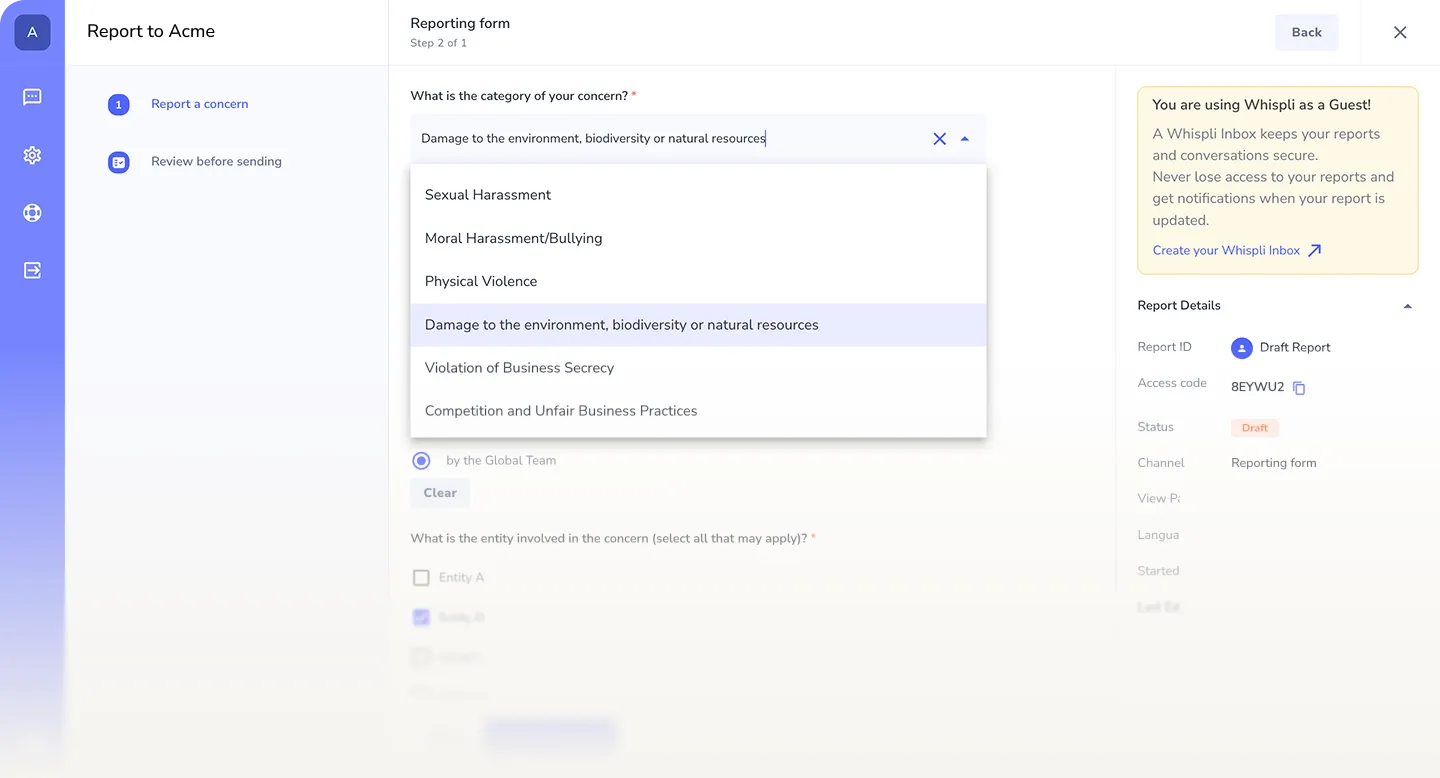
Encourage early reporting of hazards and near-misses
Protect employees while reducing injury and liability risks
Support a proactive health and safety culture at scale

Designed to meet legal requirements

Meet employer's duty of care obligations

Whispli supports employers in meeting their duty of care under occupational health and safety frameworks such as the ILO Occupational Safety and Health standards and national workplace safety laws.

Support incident prevention and near-miss reporting

Health and safety regulations increasingly encourage proactive reporting of hazards and near-misses. Secure reporting channels help identify risks early, before incidents occur.

Document investigations and corrective actions

Maintain structured records of reports, investigations and remediation actions to support compliance with workplace safety inspections, audits and regulatory inquiries.

Demonstrate continuous risk management

Show regulators and stakeholders that health and safety risks are actively monitored and addressed, aligned with ISO 45001 principles and best practices for safety management systems.

Key capabilities that support proactive
health and safety management

Confidential reporting for hazards and near-misses

Enable employees and contractors to report safety concerns, unsafe behaviours and near-miss incidents through secure channels, anonymously or identified, without fear of retaliation.

Pulse surveys to detect emerging safety risks

Use Whispli Pulse to run targeted micro-surveys and identify early warning signs related to workload, stress, unsafe conditions or declining safety culture before incidents occur.

Multi-stakeholder reporting beyond employees

Allow external parties, such as contractors, temporary workers, or site partners, to raise health and safety concerns, thereby extending visibility across worksites and operations.

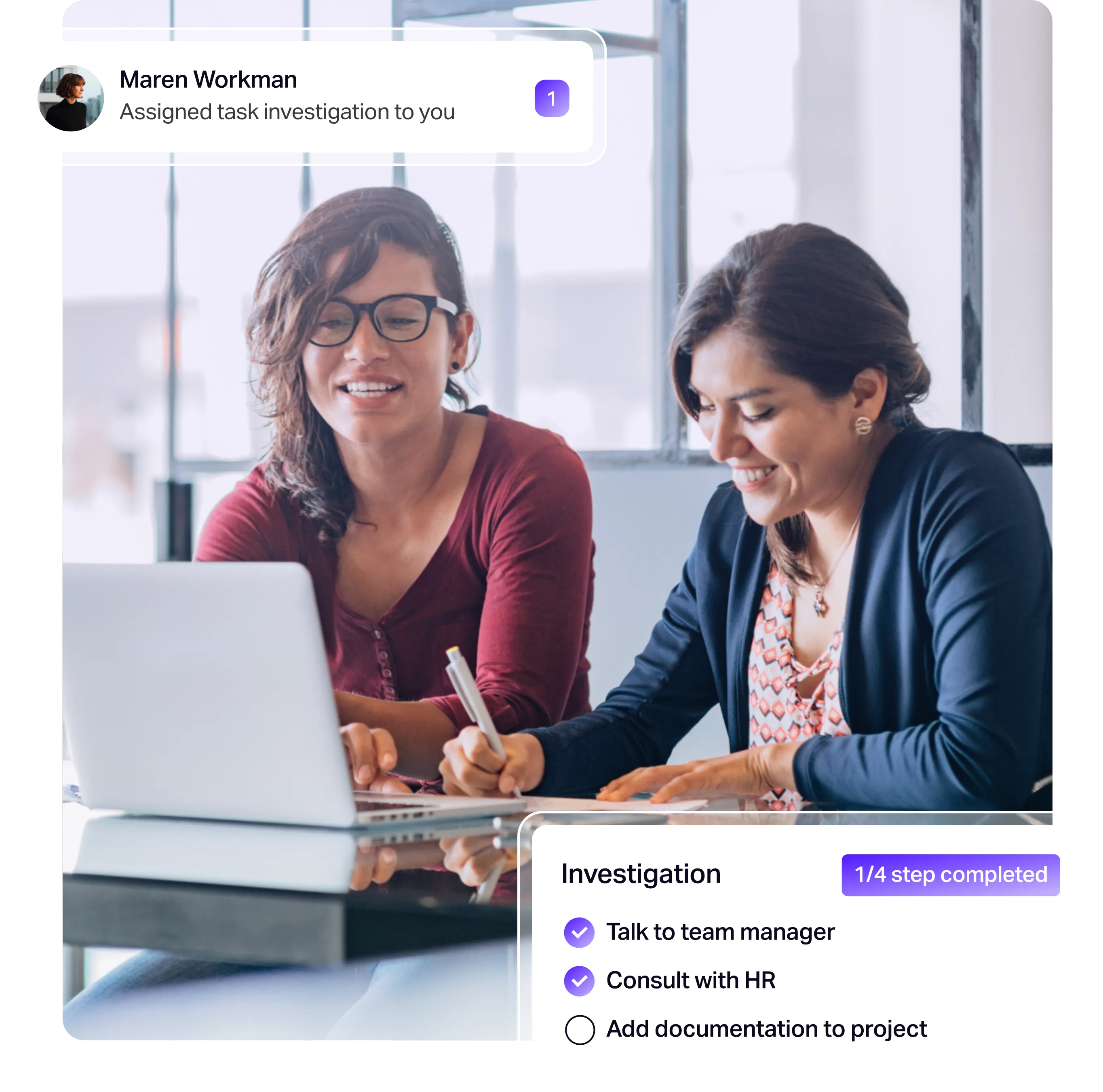
Structured incident and investigation management

Capture reports in a structured way, document investigations, corrective actions and follow-ups, and ensure consistent handling across teams and locations.

Role-based access for HR and HSE teams

Control who can view, investigate, or manage safety cases with granular permissions, ensuring confidentiality while enabling collaboration among HR, HSE, and management.

Audit-ready traceability and reporting

Maintain a complete record of reports, actions, and outcomes to support inspections, audits, and the continuous improvement of health and safety practices.


Outcomes organisations achieve with Whispli for health and safety

Earlier risk identification

Surface near-misses and unsafe situations before they result in incidents.

Stronger duty of care and prevention

Demonstrate proactive risk management and protect employees across sites.

A stronger safety culture

Encourage speaking up and reinforce trust in health and safety processes.

Empowering global organisations with higher engagement and stronger compliance outcomes

Organisations trust us
300
+

More than 300 companies, organisations and education institutions rely on Whispli to run their global speak up programs.

Countries
60
+

Whispli has been deployed in over 60 countries, demonstrating its flexibility and ease of configuration.

Languages
70
+

With no language barriers, Whispli empowers everyone to speak up confidently.

Industry
Environmental services
Company size
215,000+
Read full case study
"Whispli provided Veolia with a secure, flexible and easy to configure whistleblowing platform that strengthened trust and encouraged employees to speak up."
Bruno Masson, Vice Chairman of the Ethics Committee at Veolia
Bruno Masson
Vice Chairman of the Ethics Committee
Discover our platform

Modernise your global compliance strategy

Move from fragmented reporting tools to a single system of record designed for the realities of 2026.

Talk to our compliance experts and strengthen your global governance while uncovering risks before they escalate.

Latest insights and articles

Illustration promoting a culture of workplace safety through near-miss event reporting.
Fostering a culture of workplace safety by reporting near-miss events
Guide cover on trauma-informed approaches to conducting sensitive workplace investigations.
How to conduct a trauma-informed investigation

Explore more resources

White paper: Secure and Anonymous Reporting in the Queensland Public Sector.
Enhancing Integrity Through Reporting Solutions in the Queensland Public Sector
Learn how reporting solutions can support Queensland’s public sector employees
White paper: Monitoring Compliance Program Metrics.
Whispli, Your Partner in Monitoring Compliance Program Metrics
Learn how to measure and improve your program’s effectiveness with key metrics
White paper: Strengthening Whistleblowing Programs for APRA CPS 230.
Strengthening Whistleblowing Programs under APRA CPS 230
Discover how to align your program with APRA CPS 230 and strengthen operational resilience

Frequently asked questions

How does a speak-up channel support health and safety prevention?

A secure reporting channel allows employees to raise near-misses, unsafe conditions or concerns before incidents occur. Early signals help organisations act faster, reduce harm and strengthen a proactive safety culture.

What types of health and safety issues can be reported?

Employees can report near-miss events, unsafe working conditions, equipment issues, procedural gaps or behaviours that may put people at risk. The platform supports both urgent concerns and longer-term risk patterns.

Is anonymous reporting important for health and safety?

Yes. Employees may hesitate to report safety issues for fear of blame or repercussions. Anonymous reporting lowers this barrier and encourages earlier, more honest reporting from the field.

How do HR and HSE teams manage reports together?

Reports are centralised in a single system and routed to the appropriate HR, HSE, or management teams according to predefined rules. This ensures coordinated handling, clear ownership and consistent follow-up.