Meet EU Whistleblowing Directive requirements without complexity
The EU Whistleblowing Directive requires secure reporting and whistleblower protection across entities and countries. Whispli helps organisations meet these obligations with a compliant, defensible framework.


Trusted by +300 leading
organisations worldwide


.svg%20(1).avif)


.webp)
.webp)

.webp)


.svg%20(1).avif)


.webp)
.webp)

.webp)


.svg%20(1).avif)


.webp)
.webp)

.webp)


.svg%20(1).avif)


.webp)
.webp)

.webp)


.svg%20(1).avif)


.webp)
.webp)

.webp)


Why EU Whistleblowing Directive compliance is difficult in practice


Turn EU Whistleblowing Directive obligations into a clear, workable process


Designed for EU Whistleblowing Directive compliance
Directive (EU) 2019/1937 obligations
Support compliance with core requirements of Directive (EU) 2019/1937, including secure internal reporting channels, acknowledgement of receipt within statutory deadlines and timely, documented follow-up.
Confidentiality and data protection
Ensure strict protection of the identity of reporting persons and third parties, in line with Article 16 of the Directive, supported by appropriate technical and organisational measures under GDPR. This includes safeguards against retaliation and compliance with the Directive’s reversal of the burden of proof requirements in retaliation cases.
Procedural handling and traceability
Apply defined procedures for assessment, investigation and follow-up, with documented actions to demonstrate fairness, consistency and compliance during audits or disputes.
National transpositions and enforcement readiness
Support implementation across EU Member States, taking into account national transpositions, labour law requirements and enforcement expectations.
Key capabilities that support
EU Whistleblowing Directive compliance in practice
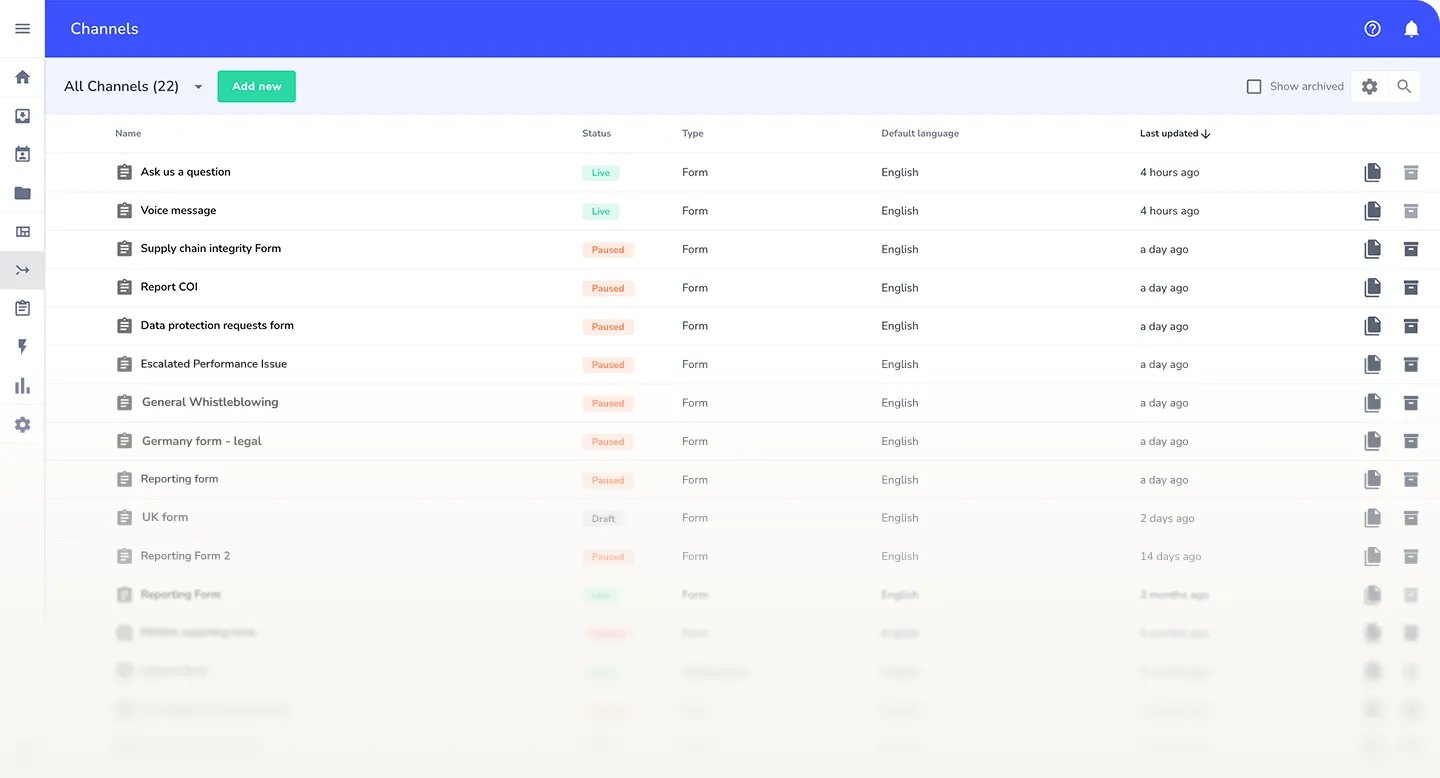
Compliant internal reporting channels
Provide secure internal reporting channels that meet the requirements set out in Article 8 of Directive (EU) 2019/1937, including controlled access, confidentiality safeguards and availability for eligible reporting persons across the organisation.
Structured follow-up and secure communication
Support follow-up obligations as defined in Article 9 by enabling secure two-way communication with reporting persons, allowing additional information to be requested and feedback to be provided while preserving confidentiality and, where applicable, anonymity.

Statutory acknowledgement and response timelines
Ensure acknowledgement of receipt and follow-up actions are tracked in line with Directive deadlines, including the requirement to acknowledge reports within seven days and provide feedback within the prescribed timeframe, with time-stamped evidence of compliance.

Confidentiality and identity protection measures
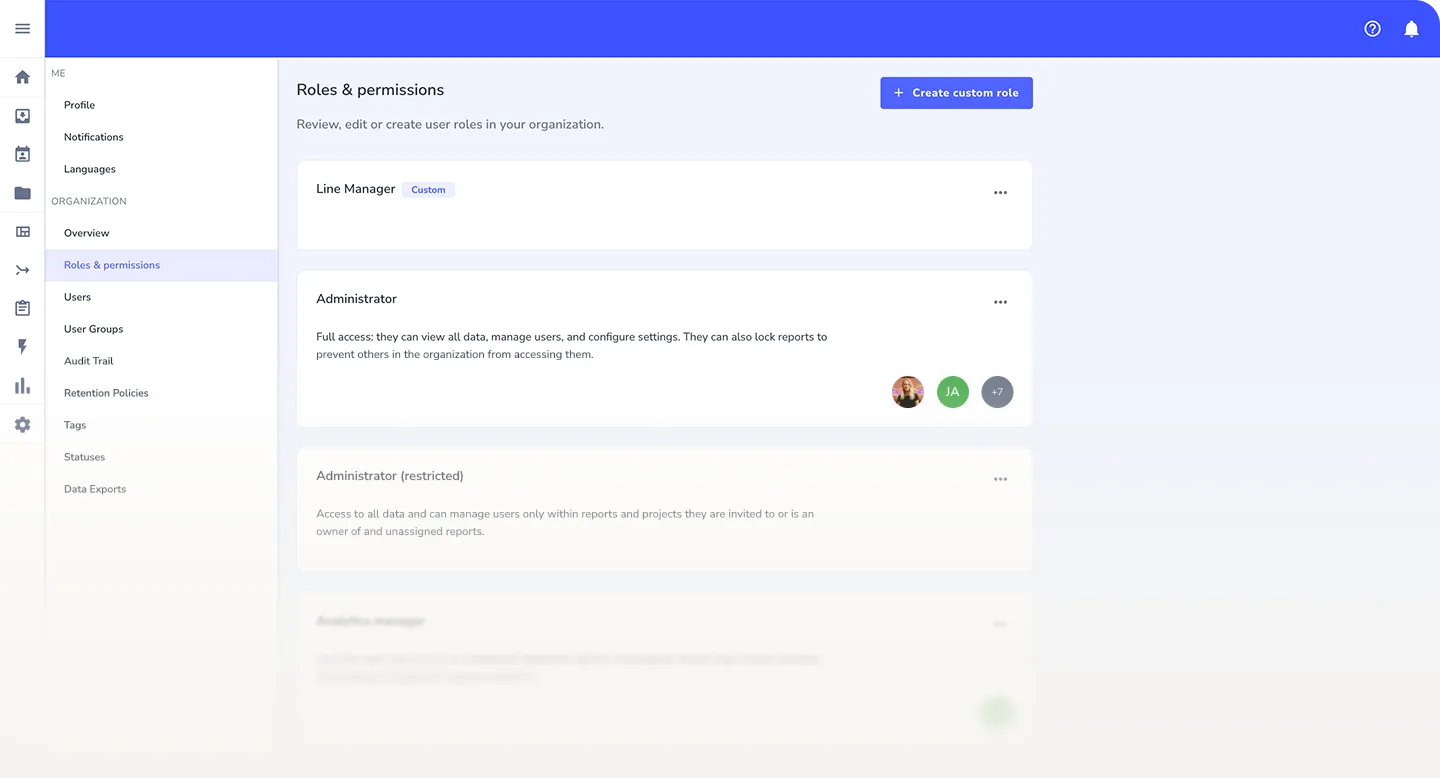
Apply strict technical and organisational measures to protect the identity of reporting persons and any third parties mentioned in reports, in accordance with Article 16, limiting access to authorised persons only and preventing unauthorised disclosure.
Documented handling and procedural traceability
Maintain clear documentation of assessment, investigation and follow-up steps to demonstrate fair and diligent handling of reports, supporting compliance in the event of audits, disputes or enforcement actions.
Consistent application across EU entities
Enable group-level implementation of whistleblowing procedures across EU entities, while allowing adaptation to national transpositions of the Directive and local labour law requirements.

Outcomes organisations achieve with EU Whistleblowing Directive-compliant processes
Demonstrable compliance with EU requirements
Organisations can evidence alignment with Directive (EU) 2019/1937, including compliant reporting channels, confidentiality safeguards, statutory timelines and documented follow-up.
Reduced legal and enforcement risk
Clear procedures, traceability and identity protection reduce exposure to sanctions, litigation and challenges related to retaliation, procedural flaws or data protection breaches.
Audit and regulator readiness
Time-stamped records and structured case handling support inspections, audits and reviews by regulators, labour authorities, courts or internal audit functions.
Empowering global organisations with higher engagement and stronger compliance outcomes
More than 300 companies, organisations and education institutions rely on Whispli to run their global speak-up programmes.
Whispli has been deployed in over 60 countries, demonstrating its flexibility and ease of configuration.
With no language barriers, Whispli empowers everyone to speak up confidently.
Modernise your global compliance strategy
Move from fragmented reporting tools to a single system of record designed for the realities of 2026.
Talk to our compliance experts and strengthen your global governance while uncovering risks before they escalate.

Explore more resources
Frequently asked questions
The Directive applies to private sector organisations with 50 or more employees and to all public sector entities. Certain obligations may also apply to smaller organisations depending on national transposition and sector-specific regulations.
Organisations must acknowledge receipt of a report within seven days and provide feedback on follow-up actions within a reasonable timeframe not exceeding three months, unless otherwise specified by national law.
Yes, provided the system allows compliance with national transpositions, local procedural requirements and appropriate delegation of handling responsibilities while maintaining group-level governance and oversight.
Failure to comply may result in administrative sanctions, reputational damage, challenges to investigations, litigation related to retaliation or procedural flaws, and adverse findings during audits or regulatory reviews.


.webp)

.webp)
.webp)


%201.avif)
%201%20(2).avif)
%201%20(1).avif)