

In all industries, the last decade has shown several cases of supply chain incidents leading to catastrophic results for the organisations implied. From food and consumer goods to automotive or procurement, unforeseen obstacles and vulnerability in their supply chain have cost millions and damaged not only the brand and organisation but humans and the workforce as well. With globalization, global supply chains are not going away anytime soon, nor are the supply chain risks that come with it.
An increasing number of laws are being put into place in order to address these risks and anticipate issues during the whole lifecycle of the creation of goods and products. This means that organisations will need to take into account these new specific local requirements when thinking of their supply chain management, especially when suppliers are located in various places and cross several borders. In order to leverage the voices of people on the field and benefit from the data extracted from incident reports, implementing a good whistleblowing management system and encouraging a Speak-Up culture is key.
Identify the types of supply chain risks
External risks
Some of the risks that you can encounter in your supply chain are out of your control and driven by factors external to your organisation. These can be categorized into 5 groups:
- Environmental risks: includes economic and social factors, governmental or legal risks related to specific requirements in the countries where your stakeholders are implemented. It can also be related to climate factors such as dangerous weather causing shipping delays.
- Business risks: related to your suppliers or external business partners, including their financial stability, a change in management, or their purchase by another company.
- Demand risks: where the actual demand and final customer intentions can be misinterpreted or unpredictable.
- Supply risks: when part of your production is stopped or delayed due to a lack of raw material, causing an interruption of your supply chain flow.
- Physical plant risks: related to the physical and compliance factors of your suppliers’ facilities, causing security and efficiency issues.
Internal risks
Contrary to external risks, internal risks take place within your organisation and can be under your control. There are 6 main internal risks to look for:
- Business management risks: essentially related to a change in management, overall processes, communication, and reporting structures.
- Control and planning risks: caused by a lack of anticipation. An inability to assess and plan results in ineffective management of your overall supply chain.
- Manufacturing risks: related to disruptions of the production process or internal operations.
- Mitigation risks: when there are no alternative solutions implemented in case something goes wrong.
- Cultural risks: a culture where negative information is hidden will cause a slower reaction to unexpected events. Promoting a Speak Up culture makes your risk management more effective.
- Modern Slavery: when people are exploited and not allowed to leave work due to abuse of power, threats, or coercion. Examples include child labour, human trafficking, and forced labour. Addressing such practices benefits the whole supply chain process and protects the organisation’s reputation and values.
Do you need to comply with Supply Chain legislation?
As of 2026, there is no single global mandatory standard, but organisations must comply with growing local regulations. Some countries rely on existing labor laws, while others, like Germany, have a dedicated Supply Chain Act.
Implemented Supply Chain laws
- USA-Mexico-Canada (USMCA): A fully enforceable framework for labor standards, including anti-trafficking safeguards and prohibitions on goods produced by forced child labour.
- Australia: Implemented a Modern Slavery Act in 2018, targeting industries that source products from the developing world to stamp out modern slavery in Australian supply chains.

- Europe: Europe: The Corporate Sustainability Due Diligence Directive (CSDDD) was adopted in May 2024 and entered into force in July 2024. However, the Omnibus I package, finalised in December 2025 and published in the EU Official Journal on 26 February 2026, dramatically reduced its scope. The CSDDD now applies only to companies with more than 5,000 employees and a net turnover above €1.5 billion, and the first compliance deadline has been pushed back to 26 July 2028. Due diligence is now limited to Tier 1 (direct) suppliers, unless there is plausible information about adverse impacts further down the chain. France's Devoir de Vigilance and Germany's Supply Chain Act (LkSG) remain in force and continue to apply at national level regardless of the CSDDD rollback.
- France: The Devoir de Vigilance law requires organisations with over 5,000 employees to establish a Compliance Plan and a reporting channel.
- Germany: The Supply Chain Act (LkSG) requires reporting channels to identify legal and economic risks at an early stage and avoid damage.
- Brazil: Obligations are imposed through ILO Conventions 29 and 105, with a "dirty list" of prohibited suppliers.
Supply chain laws pending or in progress
- Finland and Romania: Following the Omnibus I rollback, the pending national transposition picture has shifted considerably. Member States have until 19 March 2027 to transpose the amended CSDDD into national law, with obligations for in-scope companies starting from 26 July 2028. Several countries —including the Netherlands and Belgium — had been progressing national due diligence legislation ahead of the EU directive; those efforts are now being reassessed in light of the narrowed EU framework. The EU Commission is required to publish implementation guidelines by 26 July 2026.
- The Netherlands: Large organisations are expected to endorse OECD guidelines and adhere to Child Labor Due Diligence laws.
- Belgium: A law proposal aims to establish a duty of care along the entire value chain, including human rights and environmental requirements.
How Whistleblowing helps address and manage internal risks
Identify and assess early
Your best source of information will be your people. By providing access to communication channels, employees are empowered to report potential risks at an early stage. To be effective, the platform must be simple and practical, including mobile solutions for field workers and a user-friendly interface to alleviate barriers to speaking up.
Uncover hidden risks
Communication is key. Reporting channels should be highly visible (e.g., posters, QR codes on payslips). A clear Whistleblowing policy should define what to report and how cases will be handled. By uncovering trends and patterns, you can eliminate the root cause of dysfunctioning before risks escalate.
Document and take action
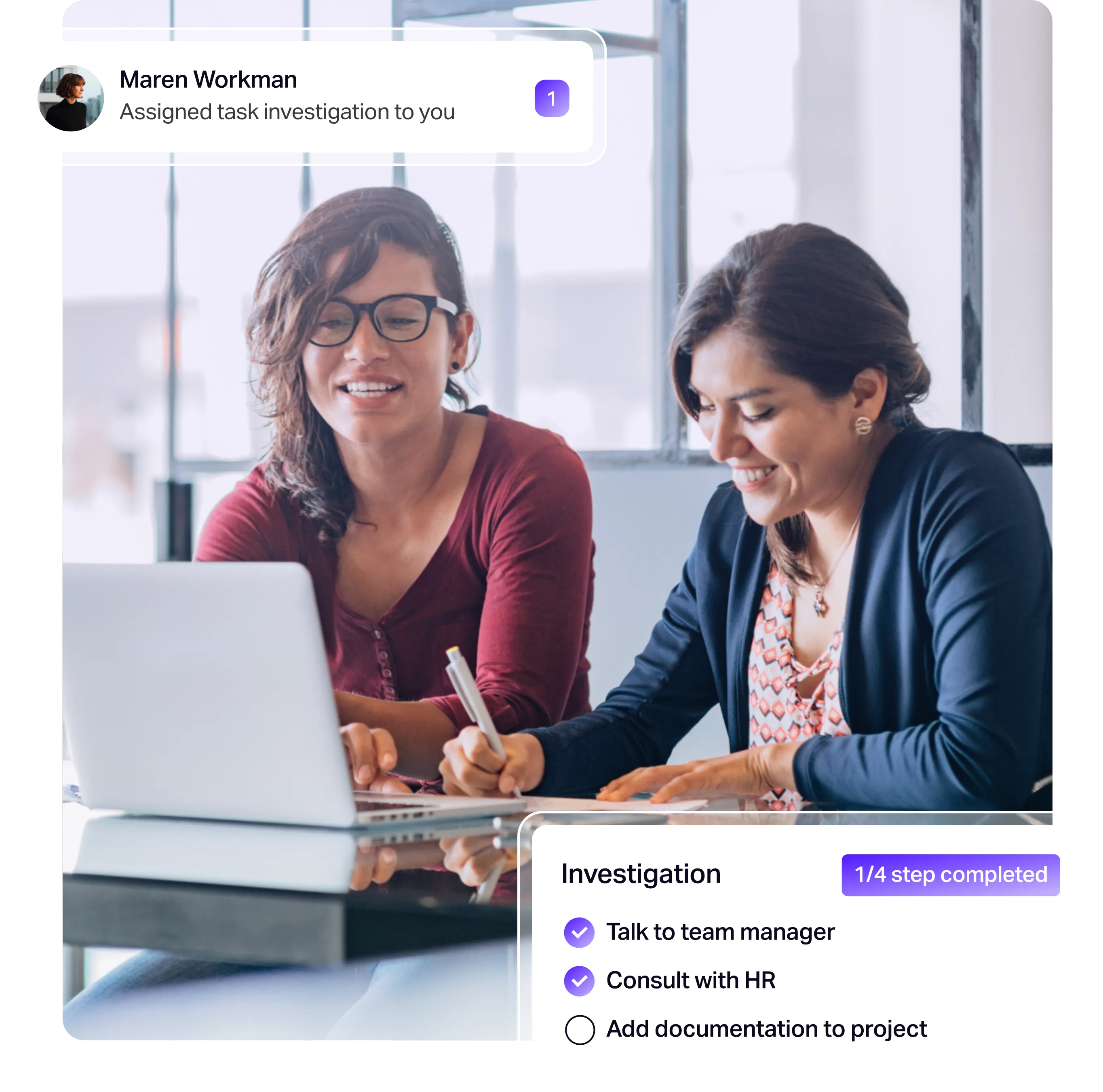
Opting for a software solution over traditional email or hotlines allows for automated triage. Reports can be automatically assigned to local case managers, streamlining the process and allowing for appropriate action directly where the risk is located.
Conclusion: From Liability to Integrity
In 2026, a "blind" supply chain is a significant legal and financial liability. The era where companies could claim ignorance about the conditions in a distant factory is over. Today, transparency is the only currency that matters to regulators and consumers alike.
Whispli provides the early-warning system needed to navigate this complex global network. By offering secure, anonymous, and multilingual channels, we help you hear the voices that the official audits might miss. We turn your supply chain from a source of hidden risk into a documented engine of integrity, ensuring that your brand is protected by the very people who power it every day.






%201.avif)
%201%20(2).avif)
%201%20(1).avif)