


Content updated on May 11 2026
Accidents and mistakes in the workplace are all-too common. A warehouse employee might trip on equipment that has not been properly stored. A construction worker might be struck by a falling object. A healthcare professional might almost administer the wrong medication. These incidents can result in sprains, fractures, or in the worst cases, death.
Mistakes don't always result in injury, however. When the warehouse employee trips but regains their balance without falling, or the object narrowly misses the worker below: this is called a near-miss event. Nearly any industry or organisation will have faced one at some point.
Though no immediate injury or damage occurs, near misses represent potential threats to the safety of employees and should be reported as soon as they occur. Reporting a near miss helps prevent future incidents and can reduce medical costs, workers' compensation payments, time lost to injury, and equipment replacement costs.
Despite this, near misses are frequently underreported. That split-second scare doesn't always register as a serious danger down the line. Employees breathe a sigh of relief and carry on with their day, often without telling anyone.

There is also the question of trust. Employees may fear retaliation if they report an incident, particularly if workplace culture implicitly or explicitly places blame on the individual rather than the system. This is a pattern seen across industries and jurisdictions: when employees feel that reporting an incident puts them at personal risk, they stay silent. And when they stay silent, the underlying hazard remains.
Employers are increasingly expected to address this proactively. Across many jurisdiction, including under the EU Whistleblower Protection Directive, organisations have an obligation to provide safe, confidential reporting channels and to protect individuals who raise concerns in good faith.
Simple Steps to Foster a Culture of Workplace Safety
1. Avoid the blame game
Speak openly with your staff about near-miss reporting. Be transparent about the process and make clear that reporting is not about placing blame: it is about fixing processes to maintain a safe environment.
2. Allow anonymous reporting
Providing employees with the option to report incidents anonymously significantly lowers the barrier to speaking up. When employees know their identity is protected, the fear of retaliation decreases and reporting rates increase.

3. Offer training and make near-misses easy to recognise
Employees may not always identify what they have experienced as a near-miss event. Define "unsafe acts" clearly so there is no ambiguity about what should be reported (e.g., slips, equipment malfunctions, or missing warning signs).
4. Make it easy to file a report
The simpler the reporting process, the more likely employees are to use it. A low-threshold, accessible reporting system available on mobile and in multiple languages removes friction that discourages reporting.

5. Follow up on every report
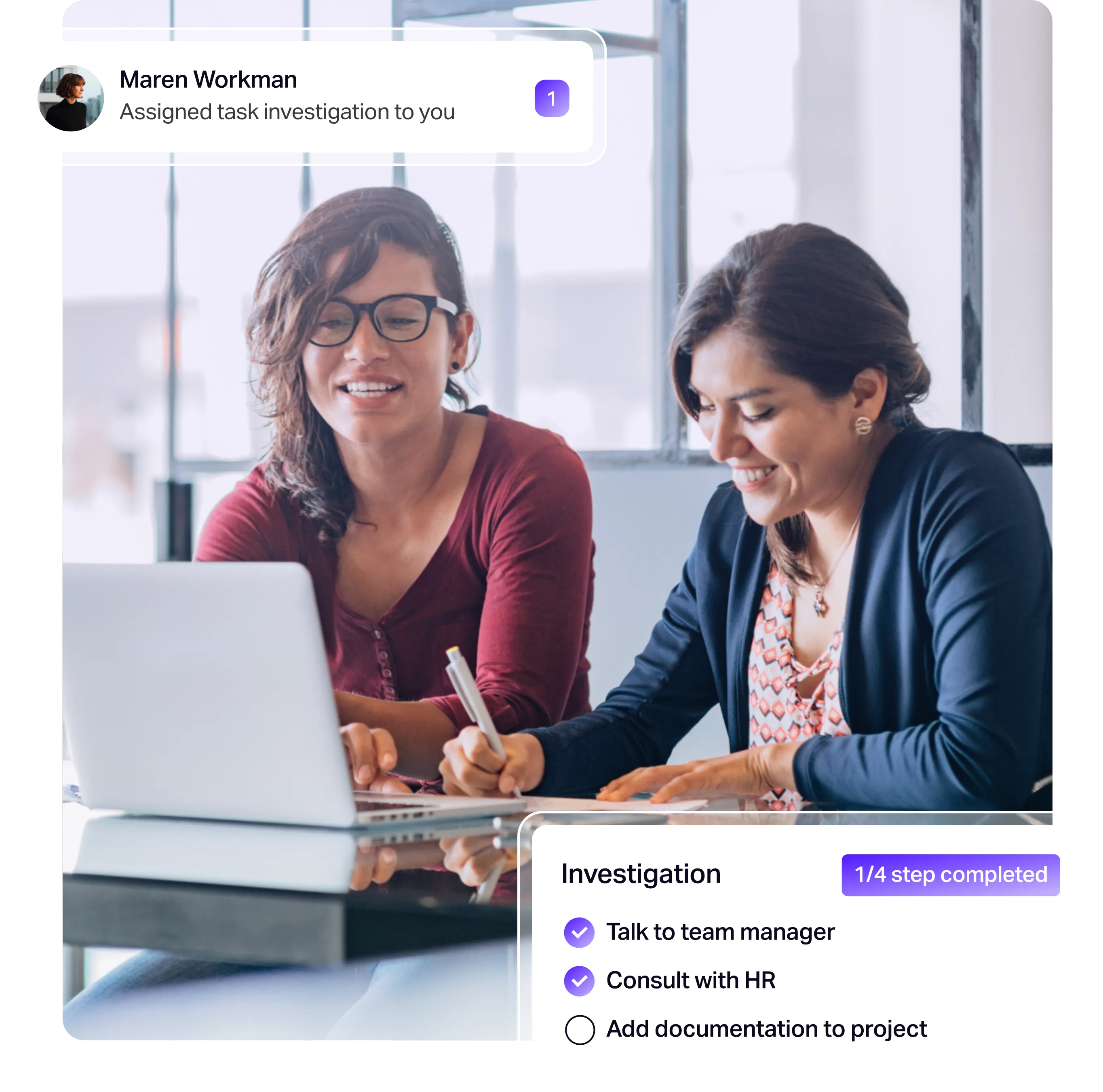
Acknowledge reports promptly, investigate thoroughly, and communicate back to the team what action was taken. Closing the loop is what builds trust over time.
Conclusion
Establishing a reliable near-miss reporting process is one of the most effective steps an organisation can take to prevent serious accidents before they happen. It requires more than a policy on paper, it requires a culture where employees genuinely believe that speaking up is safe, valued, and worth their time.
Whispli supports organisations in building exactly that. With secure, anonymous reporting channels, configurable workflows, and a case management system designed for thorough follow-up, Whispli makes it straightforward for employees to raise concerns and for teams to act on them.
A near-miss today, addressed and resolved, is a serious incident that never happens tomorrow.






%201.avif)
%201%20(2).avif)
%201%20(1).avif)