


The main purpose of internal investigations is to uncover wrongdoings within an organisation and, by implementing clear processes, prevent or limit their occurrence. Ultimately, this protects the organisation from further negative impact.
The steps an organisation takes to proceed with an investigation at the moment an informant’s report is received are crucial. These initial actions have a massive impact on employee retention, legal standing, and the overall reputation of the firm. An efficient mechanism prevents serious consequences and ensures that employees or third parties do not violate laws and regulations under the radar.
A successful internal investigation relies on case managers employing an excellent methodology to gather facts, comply with legal obligations, preserve confidentiality, and take corrective action to avert future assertions.
To achieve successful business outcomes, it is essential to accomplish the following steps:
1. Define Who Conducts the Investigation
Departments taking the lead are usually Compliance, Human Resources, In-house Counsel, or Outside Counsel.
The person in charge depends entirely on the facts of the case, the allegations involved, and the required level of confidentiality. Choosing the right investigator is the first step in ensuring the process remains impartial and protected from internal bias.
2. Formulate a Plan for the Investigation
If you haven't already, you must build a standardised workflow. This structure helps the investigator assess, investigate, and close out a case without skipping critical steps.
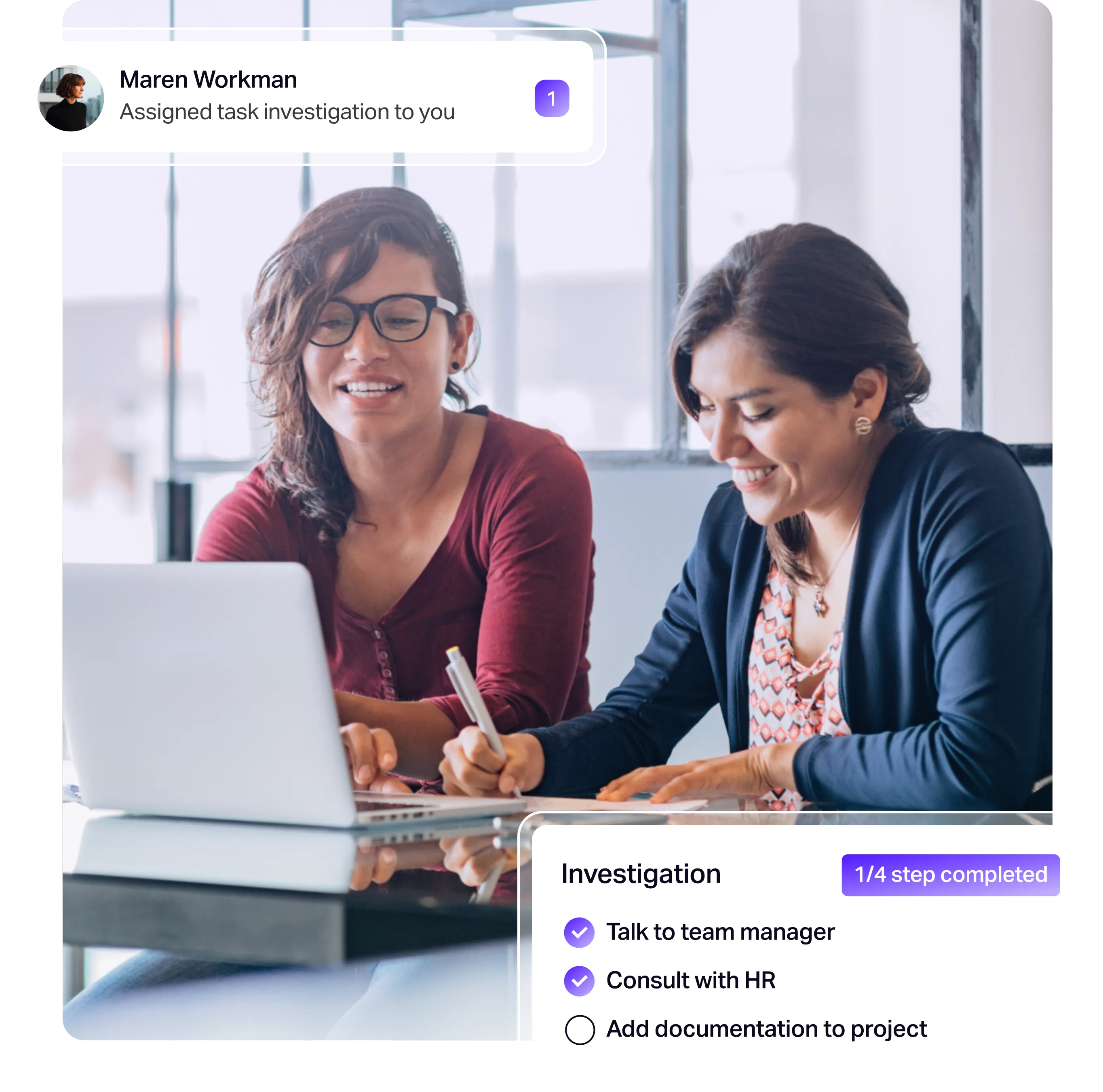
At Whispli, we provide the functionality of Workflows to help case managers apply a systematic process to every investigation. For specific types of misconduct or within certain legal jurisdictions, there are mandatory steps that must be followed—Workflows ensure you stay compliant automatically.
3. Contact the Informant and Gather Evidence
It is vital that Case Managers maintain open communication with informants. This ensures the whistleblower feels properly supported and develops confidence that their concerns are in good hands.
- Feedback Templates: Developing these in advance allows you to respond quickly and professionally.
- Managing Expectations: If a report lacks detail, set expectations early that more information may be required.
- Secure Evidence: Having a safe inbox, like the one Whispli provides, allows informants and case managers to exchange files and evidence at any time in a secure and flexible manner.
4. Keep it Confidential
You must treat all case information as highly sensitive. Understand exactly who has access to this data and ensure controls are in place to limit exposure.
Leaked information doesn't just ruin an investigation; it destroys the trust you’ve built with your workforce. The most common reason employees choose not to report misconduct is the fear of retaliation. Retaliation weakens commitment; once employees see others suffer for speaking up, they will stay silent. Misconduct that goes unreported continues to grow, increasing risk because management is never given the opportunity to fix the "disease" before it spreads.

5. Timing is Critical: Take Appropriate Action
Don't delay. Taking prompt, appropriate action from the beginning to the conclusion of the investigation is vital.
Consider all remedial options, taking into account both proactive and reactive measures. Automations within Whispli help the organisation decide what happens next based on the informant’s responses or the case manager’s actions. By acting quickly on updates and alerts, the internal investigation remains effective and focused.
Conclusion: Dealing with the "Fox in the Hen House"
In a nutshell, a great investigation system is defined by its ability to:
- Maintain a vigorous compliance program.
- Act on information received without hesitation.
- Keep employees engaged and valued.
- Effectively identify and remove the "Fox in the Hen House" before damage is done.
Whispli is designed to accompany you through every stage of this process. We provide a centralized, safe, and flexible environment where your investigators can follow rigorous workflows while your whistleblowers remain protected by supreme confidentiality. By moving your investigations into a platform built for 2026, you ensure that you aren't just reacting to problems—you are proactively managing your corporate integrity.
Don't leave your reputation to chance. Discover how Whispli’s investigation tools can protect your organisation.






%201.avif)
%201%20(2).avif)
%201%20(1).avif)